Grounds for Discovery: The Small-Batch Coffee Roasters Quietly Putting Phu Quoc on the Map
You probably already know Vietnam as one of the world's biggest coffee producers. Robusta beans, sweetened condensed milk, slow drip filters — the whole scene has had a moment in the US over the last decade. But here's what most travel guides won't tell you: Phu Quoc, the island most Americans associate with white sand beaches and fish sauce, is quietly developing one of Southeast Asia's most interesting specialty coffee cultures. And almost nobody outside the local scene knows it yet.
If you're the kind of traveler who budgets time for a great cup the same way you budget time for a great meal, this is your heads-up.
Why Phu Quoc? Seriously, Why Here?
Fair question. The island sits in the Gulf of Thailand, far from the misty highlands of Da Lat or the sprawling plantations of Buon Ma Thuot — the regions that dominate Vietnam's coffee identity. But Phu Quoc has a few things going for it that most people overlook.
The island's interior highlands carry volcanic soil with a mineral density that coffee agronomists find genuinely compelling. Elevation isn't dramatic by Vietnamese standards, but the microclimate created by the dense jungle canopy and consistent coastal humidity produces growing conditions that are unlike anything else in the country. A handful of small farmers — most of them working plots that double as pepper or fruit orchards — have been quietly experimenting with arabica and robusta hybrids for years.
What's changed recently is that roasters are now finding these farmers. And the results are worth the trip off the beach.
Meet the People Behind the Beans
Nguyen Thanh Lam started roasting out of a converted storage shed on the northern end of the island about four years ago. He'd spent time working in Ho Chi Minh City's third-wave cafe scene before deciding the mainland was too crowded and too expensive. Phu Quoc, he figured, was underserved.
"When I moved here, people thought I was crazy," he says, laughing. "Everyone comes to Phu Quoc for the sea. Nobody was thinking about coffee."
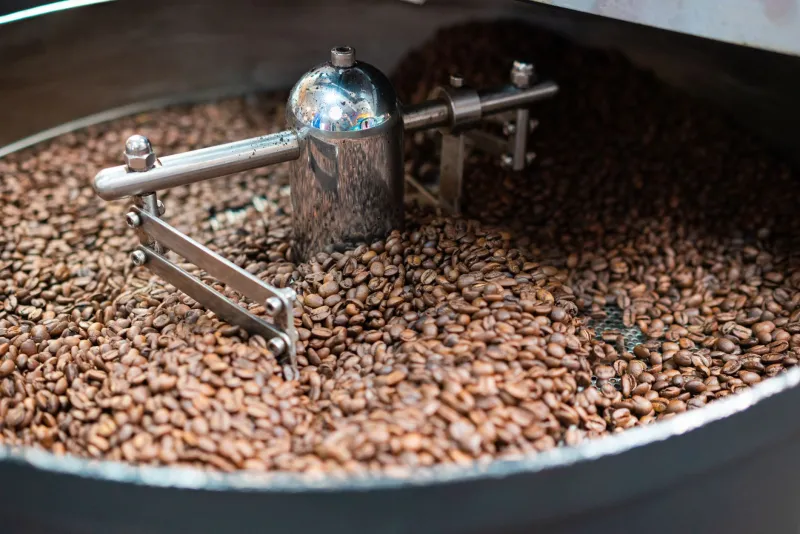
His operation — small enough that he roasts in batches of about five kilograms at a time — now supplies three cafes on the island and ships directly to buyers in California and Oregon. He sources almost exclusively from two farming families in the An Thoi highlands, paying well above market rate in exchange for early harvest access and transparency about processing methods.
That direct trade model is becoming a pattern among Phu Quoc's roasters. Tran Bich Phuong, who runs a roastery-cafe hybrid near Duong Dong, describes her sourcing philosophy in terms that would sound familiar to anyone who's spent time in Portland's coffee scene. "I want to know the person who grew it. I want to know what the soil looked like that season. I want to be able to tell my customers something real."
Phuong's naturally processed arabica — dried in the fruit on raised beds before hulling — has a fruit-forward complexity that's unusual for Vietnamese beans. She's been contacted by two US importers in the past year alone.
How American Coffee Culture Is Connecting With the Island
The pipeline between Phu Quoc's roasters and American consumers is still informal, but it's growing. Some connections start with tourists who stumble into a roastery, taste something that surprises them, and ask how to keep ordering after they get home. Others are built through Instagram, where the visual appeal of a jungle roasting setup travels well.
A few specialty importers on the West Coast have made exploratory trips to the island, drawn by word-of-mouth from travelers who couldn't stop talking about what they'd found. The volume is tiny for now — we're talking micro-lot territory — but the interest is real.
For American visitors with a coffee background, the experience of visiting one of these roasteries is something between a farm tour and a tasting room visit. You're seeing the whole process, often in someone's home or backyard setup, with a level of access that would cost serious money to replicate at a high-end coffee experience in the States.
What to Order and Where to Look
Phu Quoc's specialty coffee scene doesn't advertise itself. You won't find it on the big tourist maps or in the resort lobby brochures. The best approach is to wander the streets around Duong Dong market in the early morning, when the locals are doing the same. Look for small cafes with roasting equipment visible from the street — if you can smell fresh-roasted beans, go in.
A few things worth ordering when you find the right spot:
- Natural-processed arabica, black — lets the bean's character come through without distraction
- Ca phe trung (egg coffee) made with single-origin beans — a Vietnamese classic elevated by better sourcing
- Cold brew with local robusta — the island's humidity makes cold brew feel like the obvious choice, and the robusta here has a cleaner finish than you might expect
If you want to go deeper, ask the roaster directly about visiting the farms. Several of them offer informal tours for serious enthusiasts, and the highland interior of Phu Quoc is worth the trip on its own terms — pepper vines, jungle trails, and the kind of quiet that doesn't exist anywhere near the beach resorts.
The Bigger Picture
What's happening in Phu Quoc's coffee scene is a small version of something playing out across Southeast Asia: local producers with real craft knowledge finding ways to connect directly with consumers who care about quality and origin. The island's tourism infrastructure, which sometimes feels like it's developing faster than the culture can absorb, hasn't yet swallowed this scene. The roasters here are still operating on their own terms.
That won't last forever. The window to experience Phu Quoc's coffee culture as a genuinely grassroots thing — before the branding catches up, before the airport gift shops start selling vacuum-sealed versions — is probably a few years wide at most.
So if you're planning a trip and you care about this stuff, build in a morning. Skip the resort breakfast buffet. Go find the shed with the roaster in it. The cup you get there will tell you more about this island than anything on a guided tour.
And yeah, ask for the farmer's name. Chances are the person behind the counter knows it by heart.