Before the Island Wakes: The Home Cooks Feeding Phu Quoc's Invisible Workforce
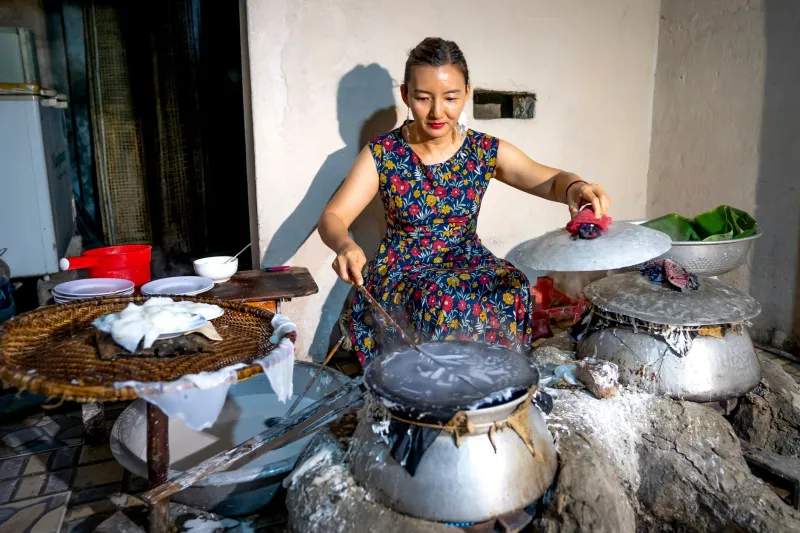
It's 3:47 a.m. and Bà Lan is already on her second pot of broth.
Her kitchen—a narrow open-air room attached to the back of a concrete house in Dương Tơ—smells like lemongrass, pork bone, and charcoal smoke. A single fluorescent bulb hums overhead. Her granddaughter sleeps twenty feet away. By 5:15, Bà Lan will have portioned out forty servings of cháo (rice porridge), packed them into plastic containers stacked on a rattan tray, and handed them off to a motorbike driver who will distribute them across three construction sites on the island's northern edge.
She charges about 20,000 Vietnamese đồng per portion—less than a dollar. She does this six days a week.
"The workers need something hot before the sun gets bad," she says, stirring without looking up. "Nobody else is going to do it."
This is the Phu Quoc that doesn't appear in travel brochures.
The Economy That Runs Before Sunrise
Phu Quoc has transformed dramatically over the past decade. The resorts are glassier, the airport busier, the Instagram content more aggressively curated. But beneath all of that development is a functioning island—one that requires thousands of people to be awake, fed, and mobile well before 6 a.m.
Construction workers building the next luxury complex. Hotel staff setting up buffet stations for guests who won't arrive for two hours. Seafood vendors hauling catch from the docks to the market stalls. Street food sellers prepping their own ingredients before they can feed anyone else.
These workers aren't eating at restaurants. They're eating from people like Bà Lan—home cooks operating out of residential kitchens, often without formal permits, selling directly to a loyal roster of regulars who've been eating their food for years.
It's an informal economy, yes. But "informal" doesn't mean small. Talk to enough locals and you start to realize this network is everywhere: tucked into alleyways off the main roads, operating out of garage-front setups, running through WhatsApp groups and handwritten order sheets.
Who's Running These Kitchens
The profiles vary more than you'd expect.
There's Chú Minh, a retired squid fisherman in his late sixties whose bad knee ended his time on the water five years ago. He now makes bánh mì filling—slow-braised pork, pickled daikon, house-made pâté—that gets picked up each morning by a vendor who runs a cart near the An Thới ferry terminal. Chú Minh handles prep. The vendor handles sales. They split the margin. Neither calls it a business.
Then there's Hoa, a woman in her mid-thirties raising two kids on her own. She cooks bún bò Huế—a spicy, lemongrass-heavy beef noodle soup with roots in central Vietnam—that she learned from her mother, who was from Huế originally. Hoa takes orders the night before via phone and has everything ready by 5 a.m. Her customer base is almost entirely hospitality workers from three nearby hotels. "They tell their friends," she says. "I haven't had to advertise once."
And there are the grandmothers—a category unto themselves. Women who've been feeding extended families for forty years and simply scaled sideways when the kids grew up and the island started filling with hungry workers. Their food tends to be the most deeply traditional: congee built from recipes passed down without ever being written, herb combinations that no restaurant on the island exactly replicates.
What They're Cooking
The menus shift with the season and whatever's cheap at the market that week, but certain dishes show up again and again in these pre-dawn rotations.
Cháo (rice porridge) is the undisputed workhorse—easy to eat fast, gentle on an empty stomach, endlessly adaptable. You'll find it with pork and ginger, with fish and scallion, with century egg for the workers who want something richer.
Bánh cuốn—steamed rice rolls filled with ground pork and wood ear mushroom—shows up in the kitchens of cooks with more equipment and patience. It's labor-intensive and requires skill, which means the women who make it well have earned serious local reputations.
Xôi (sticky rice) is the grab-and-go staple: mung bean and fried shallots, or coconut and pandan, or the savory version with lap cheong sausage. It travels well, fills fast, and costs almost nothing to make in volume.
And the broths. Always the broths. Pho, bún bò, hủ tiếu—each one simmered from bones that went into the pot the night before. These aren't shortcuts. They're the product of decades of practice and an intimate knowledge of what a tired body needs at 4 in the morning.
How American Visitors Can Engage (Without Getting It Wrong)
Here's where it gets a little delicate, and worth being honest about.
These kitchens aren't set up for tourism. They're not experiences designed to be consumed—they're livelihoods built around specific, trusted relationships. Rolling up as a curious foreigner with a camera and a translation app is not the move.
That said, there are real ways to connect with this world respectfully.
Go through local guides who have actual relationships. A handful of community-based tour operators in Phu Quoc now offer early morning food walks that include stops at home kitchens—but only ones where the cook has opted in and genuinely welcomes visitors. These aren't hard to find if you ask around at your accommodation or check with smaller guesthouses rather than resort concierges.
Eat at the market early. The Dương Đông market between 5 and 7 a.m. is where many of these home-cooked items end up for sale. Buying there—without haggling aggressively over a 50-cent bowl of porridge—puts money directly into the right hands.
Ask your hotel staff where they eat. Seriously. The housekeeper, the guy who handles luggage, the woman at the front desk—they know exactly where to get a good bowl before their shift. If you ask with genuine curiosity rather than a sense of entitlement, most people are happy to share.
Don't post locations without permission. The fastest way to disrupt a functioning informal kitchen is to flood it with foot traffic it wasn't built for. If someone shares a spot with you, treat it like a gift, not a content opportunity.
The Alarm Clock Nobody Hears
By the time most tourists are ordering their first iced coffee of the day, Bà Lan has already cleaned her kitchen, counted her cash, and gone back to bed for a few hours.
The broth is gone. The containers are out on motorbikes. Forty construction workers on the north end of the island have eaten something warm and made by hand.
The island runs. The resorts gleam. And somewhere in a residential alley that doesn't show up on any map, a fluorescent bulb clicks off.
That's Phu Quoc too. Maybe the most real version of it there is.