Wrapped in Purpose: How Phu Quoc's Seafood Producers Are Ditching Plastic Without Losing Their Edge

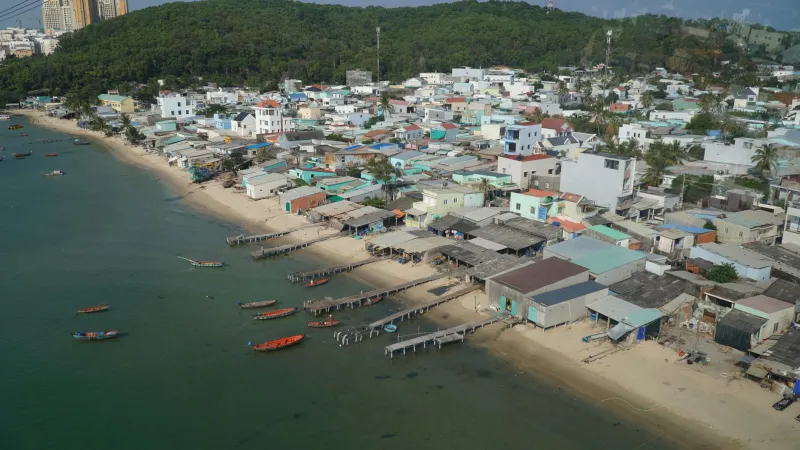
There's a particular kind of irony that hangs over Phu Quoc like a sea breeze: the island is famous for some of the cleanest, most flavorful seafood in Southeast Asia, yet for decades, the industry that made it famous was quietly choking that same ocean with plastic. Bottles, bags, foam trays — the packaging pipeline behind Vietnam's beloved fish sauce and dried seafood exports was, to put it plainly, a mess.
But something is shifting. Quietly, persistently, and with the kind of pragmatic creativity that seems to define Vietnamese coastal culture, producers on this island are rethinking how their products reach the world. And increasingly, the world they're designing for includes American kitchens, American grocery shelves, and American consumers who are reading labels more carefully than ever before.
The Problem Nobody Talked About at the Table
For most visitors to Phu Quoc, the seafood experience is purely sensory — the snap of a grilled prawn, the umami depth of a spoonful of nước mắm drizzled over rice. What doesn't make it onto the tourist itinerary is the back end: the processing facilities, the export logistics, the mountains of single-use plastic that once moved product from island docks to international ports.
Vietnam is among the top producers of fish sauce globally, and Phu Quoc's variety — made from black anchovies fermented in wooden barrels — carries a protected geographical indication, similar to how Champagne works in France. It's a premium product with a global following. But premium doesn't automatically mean sustainable, at least not historically.
"We were focused on quality inside the bottle," says one third-generation producer whose family has operated in Duong Dong for over 60 years. "The bottle itself? That wasn't our problem to solve. We thought."
That thinking started to change around 2019, accelerated by a combination of international pressure, shifting export regulations in the EU, and — perhaps most meaningfully — feedback from American import partners who were fielding questions from eco-conscious retailers.
Glass, Leaves, and Clever Compromises
The pivot hasn't been a single dramatic overhaul. It's been a series of smaller, smarter decisions stacking up over time.
Several of Phu Quoc's mid-sized fish sauce producers have transitioned to returnable glass bottles for domestic distribution, while shifting export lines to lighter-weight glass with recycled content — a move that cuts shipping emissions while satisfying the sustainability benchmarks that American natural food retailers increasingly require from their suppliers.
For dried seafood — squid, shrimp, and anchovies that are staples in Vietnamese-American pantries — the shift has been even more inventive. Some smaller operations have returned to traditional banana-leaf and bamboo-based wrapping for market-direct sales, while export-focused producers are experimenting with compostable cellulose films and kraft paper vacuum sealing that maintains the same shelf life as conventional plastic without the environmental hangover.
One producer who exports dried squid to Vietnamese grocery distributors in California and Texas described the transition as "harder than it sounds and more worth it than we expected." The compostable film cost roughly 30 percent more per unit at first. Within two years, a combination of supplier negotiations and volume increases brought that premium down to under 10 percent — a gap that a growing number of American importers have been willing to absorb in exchange for better sustainability credentials.
Why American Consumers Are Driving the Change from 8,000 Miles Away
It might seem strange that a grocery shopper in Portland or a restaurant buyer in Chicago could influence what packaging a family-run operation in Phu Quoc uses. But that's exactly how modern supply chains work — and it's increasingly how environmental progress travels.
The Vietnamese-American community, which numbers well over two million people across the US, has long been the primary domestic market for Phu Quoc's exported seafood products. But over the past decade, interest in Vietnamese ingredients has exploded well beyond that community. Fish sauce, once a niche pantry item, now appears in recipes from major American food publications and sits on shelves at Whole Foods and Trader Joe's. That expanded audience brings expanded expectations.
"Our American buyers are asking questions we never got five years ago," says one export coordinator who works with distributors on the West Coast. "They want to know about the packaging materials. They want to know if we're certified. They want to know what happens to the container after it's empty."
For producers willing to answer those questions with something better than a shrug, the reward is access to a premium market segment that's willing to pay for it.
The Certification Puzzle
Not everything is moving smoothly. Sustainable packaging is one piece of a larger certification puzzle that many of Phu Quoc's smaller producers are still working through. International eco-certifications — the kind that carry weight with American retailers — require documentation, audits, and fees that can feel prohibitive for family operations that are already running on tight margins.
NGOs and Vietnamese government programs have stepped in to help bridge that gap, offering subsidized certification pathways and technical assistance for producers looking to formalize their green practices. Progress is uneven, but the direction is clear.
There's also the question of consumer education. A compostable package is only as effective as the composting infrastructure available to the person who buys it. In the US, that infrastructure varies wildly by city and state — a nuance that Phu Quoc's producers are largely at the mercy of once their product leaves the island.
Tradition as a Template
Here's what's easy to miss in the sustainability conversation: many of Phu Quoc's most eco-friendly packaging innovations aren't actually innovations at all. They're recoveries.
Before plastic became cheap and ubiquitous, Vietnamese fishing communities wrapped, stored, and transported seafood using exactly the kinds of natural materials that sustainability advocates are now championing — leaves, clay, woven baskets, wood. The "revolution" in packaging is, in some ways, a return.
That framing matters, especially for producers who might otherwise feel like they're being asked to sacrifice tradition for trend. When the pitch is "go back to what your grandparents did, but scale it for a global market," it lands differently.
For American travelers who make it out to Phu Quoc — and if you haven't, you should — visiting one of the island's fish sauce factories or dried seafood markets isn't just a cultural experience anymore. It's a window into a supply chain that's actively trying to do better. The barrels still smell the same. The fish are still the same. But the conversation around how all of it gets to you has changed in ways that are genuinely worth paying attention to.
So next time you reach for that bottle of nước mắm at your local Asian grocery, take a second look at the packaging. There's a good chance someone in Phu Quoc thought hard about it.