Tuning In to Phu Quoc: How Ocean Sound Baths Are Replacing Expensive Wellness Retreats for Burned-Out Americans
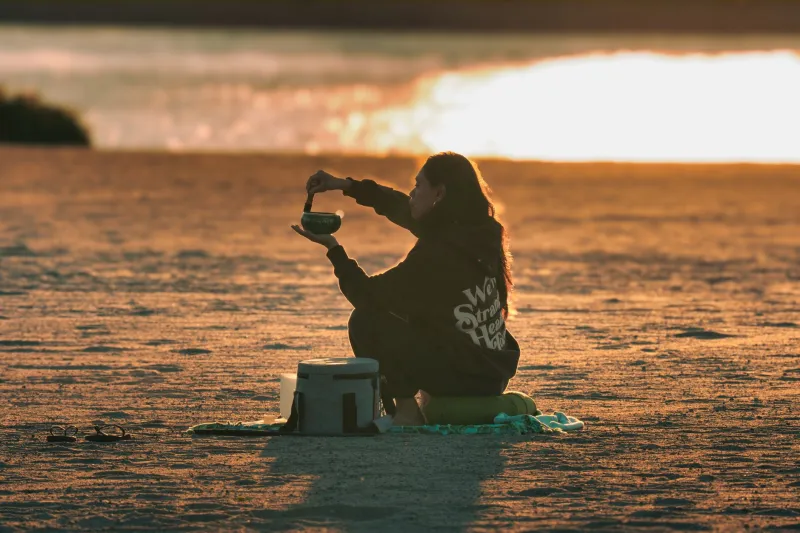
There's a moment, somewhere between the third singing bowl strike and the sound of a fishing boat bell drifting in from the water, when your brain just... stops arguing with itself. No Slack notifications. No mental to-do list. Just sound, salt air, and something that feels a lot like relief.
That moment is exactly why Americans are booking flights to Phu Quoc — not for the five-star resorts or the Instagram-ready cable car, but for what's quietly happening on the island's lesser-known beaches at dawn and dusk.
The Island Has Always Had Its Own Frequency
Phu Quoc isn't a quiet island in the way a remote mountain cabin is quiet. It has its own layered acoustic life — the low churn of longtail boats, the rhythmic slap of nets against wooden hulls, temple bells carried on the wind from somewhere inland, and beneath all of it, the steady percussion of waves that haven't changed in centuries.
For Linh Trân, a wellness practitioner who grew up in a fishing family on the island's northern coast, that soundscape was always the backdrop. It wasn't until she trained in Tibetan singing bowl therapy in Hội An and returned home that she realized the ocean itself was half the treatment.
"I used to think I needed a special room, special lighting, incense," she says, laughing softly. "Then I did a session outside, near the water, and my clients fell into a deeper state than anything I'd seen indoors. The sea was doing most of the work."
Linh now runs small-group sound bath sessions on a stretch of beach near Bãi Thơm — far enough from the main tourist drag that you're more likely to see a crab than another traveler. Sessions run about 75 minutes, cost a fraction of what you'd pay at a retreat center in Sedona or Tulum, and are often timed to catch either the early morning mist or the soft gold of late afternoon light.
Why Americans Are Making the Trip
The US wellness industry is enormous — somewhere north of $480 billion by some estimates — and yet a growing number of Americans feel like they're not actually getting well. They're just getting busier about wellness. Tracking sleep scores, booking $40 sound bath classes in converted Brooklyn warehouses, and still waking up exhausted.
Marcus Delray, a 38-year-old UX designer from Austin who visited Phu Quoc last spring, puts it plainly: "I'd done the whole retreat circuit. Joshua Tree, Costa Rica, even a week in Bali. And they were fine. But there was always something performative about it. Everyone was kind of... watching each other be healed."
He found Linh's sessions through a travel forum, almost by accident, and booked a week on the island with no fixed itinerary. "The first morning I showed up on that beach and there were maybe six people, some mats, a few bowls, and the ocean. No photographer. No branded merch. Just the thing itself."
He stayed for three weeks.
What Makes Phu Quoc Different
It's not just the price point, though that's real — a full week of daily sessions with a local practitioner often costs less than a single weekend retreat stateside. What practitioners and visitors alike keep coming back to is the integration of the natural environment in a way that indoor or even poolside wellness spaces can't replicate.
Vietnam has its own deep traditions of sound-based healing, rooted in Buddhist ceremony, folk medicine, and the rhythmic practices of coastal communities. Local healers like Linh are increasingly weaving those threads into frameworks that Western visitors recognize — sound baths, breathwork, somatic meditation — without stripping out what makes the experience distinctly Vietnamese.
Nguyễn Quang Minh, who runs a small eco-guesthouse near the southern tip of the island and hosts wellness practitioners on his property, sees the shift clearly. "Five years ago, the Americans who came here wanted luxury. Now they want something real. They want to feel the sand, hear the boats, not be insulated from the place they traveled to."
His guesthouse has become an informal hub for visiting wellness facilitators — a rotating cast of practitioners from across Vietnam and Southeast Asia who offer sessions ranging from traditional sound healing to acoustic meditation walks through the island's coastal forest trails.
The Sessions Themselves
No two practitioners do it exactly the same, which is part of the appeal. Some sessions are intensely still — participants lying on mats while bowls are placed on or near the body, vibrations washing through muscle and bone. Others are more mobile, with guided walks timed to the rhythm of the tide, participants asked to listen actively to layers of sound the way you might read layers of a landscape.
One practitioner, who asked to be identified only as Hoa, incorporates elements of traditional Vietnamese folk chanting alongside modern sound therapy instruments. "The ocean has its own song," she explains through a translator. "My job is just to help people hear it. Most of them have forgotten how to listen."
Participants consistently report the same thing: a kind of mental decompression that feels qualitatively different from other forms of rest. Sleep researchers have noted that certain sound frequencies can shift brainwave activity toward states associated with deep relaxation — but most visitors aren't thinking about the science when they're lying on a beach in Phu Quoc as the sun comes up over the South China Sea.
They're just finally quiet.
What to Know Before You Go
This isn't a packaged wellness product yet, and that's precisely the point. Most practitioners work through word of mouth, small guesthouses, or informal community networks. If you're hoping to find this experience, here's how to approach it:
- Go north or south. The beaches around Bãi Thơm in the north and the quieter coves near Mũi Ông Đội in the south are where most of these sessions happen. The main tourist beaches near Dương Đông are too loud and too crowded.
- Book through local guesthouses. Eco-guesthouses and smaller family-run accommodations are the best connective tissue. Ask directly — most owners know who's running sessions nearby.
- Come with no expectations. Seriously. The practitioners here aren't selling a brand or a transformation arc. They're offering an experience that will be different every time based on weather, tide, and the group that shows up.
- Stay more than two days. One session is interesting. A week of sessions is when something actually shifts.
The best time to visit for this kind of experience is between November and April, when the weather on the island's western coast is calm and the mornings are cool enough to lie on a beach mat without melting.
The Bigger Picture
What's happening on Phu Quoc's quieter beaches is part of a broader shift in how American travelers think about international wellness travel. The retreat-industrial complex — with its $3,000 weekend packages and matching linen sets — is losing ground to something scrappier, more embedded, more honest.
Phu Quoc isn't selling you a transformation. It's just offering a beach, a bowl, and the oldest sound system on earth.
Sometimes that's more than enough.