Still Standing: The French Colonial Lighthouses of Phan Thiết and the Families Who Never Left

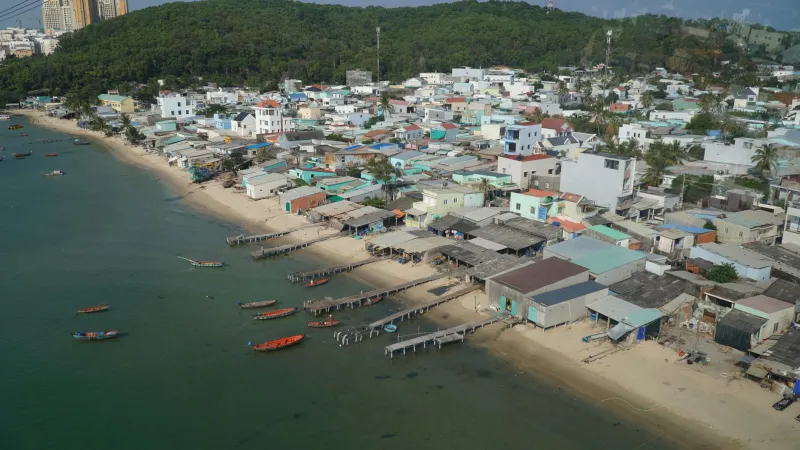
Photo: CommonsNomad, CC BY-SA 3.0, via Wikimedia Commons
Most Americans who make it to Phan Thiết are chasing the obvious stuff — the red dunes, the kite surfers, the seafood spreads along the waterfront. And look, none of that is wrong. But somewhere between the resort check-ins and the Instagram sunsets, a whole layer of this city just sits there, unvisited and mostly unbothered.
We're talking about the lighthouses.
Not the glossy, renovated kind you'd find on a postcard. The real ones — salt-stained, sun-bleached, and still technically operational — perched along the rocky headlands south of the city center. They were built by French colonial engineers in the late 19th and early 20th centuries, designed to guide fishing vessels and merchant ships through the unpredictable waters of the South China Sea. They've outlasted empires, wars, and decades of neglect. And somehow, they're still standing.
The Architecture Nobody Talks About
Phan Thiết doesn't get a lot of credit for its colonial architecture, and that's partly because so little of it survived in good condition. The city's French-era buildings were mostly functional — administrative offices, warehouses, a few civic structures — rather than the grand colonial showpieces you'd find in Hanoi or Saigon. But the lighthouses are different. They were built to last, and built to be seen.
The most accessible of them sits on a rocky promontory south of Mũi Né, rising about 35 meters above the waterline. The stonework is thick and deliberate, the kind of construction that assumes the building will still be there long after the builders are gone. There's a spiral iron staircase inside — original, as far as anyone can tell — and narrow windows that frame the coastline in ways that feel almost cinematic.
The design language is unmistakably French colonial: arched doorways, tapered cylindrical towers, decorative ironwork that's more ornate than strictly necessary. It's a small detail, but it tells you something about the era — even utilitarian structures were expected to carry a certain aesthetic weight.
A second, less-visited lighthouse sits further down the coast near the fishing hamlet of Tiến Thành. It's shorter, rougher around the edges, and partially obscured by overgrown vegetation. Getting there requires a bit of navigation — ask locally, because the road signs aren't exactly reliable — but the payoff is real. You'll likely have the place entirely to yourself.
The Families Behind the Beacons
Here's the part that doesn't make it into the guidebooks: these lighthouses are still maintained by Vietnamese families, many of whom have been doing this work for two, three, sometimes four generations.
The lighthouse keeper tradition in Vietnam is a surprisingly resilient institution. During the French colonial period, local workers were trained to operate and maintain the navigation lights. After independence, the Vietnamese government kept the system running, and the families who'd learned the trade simply continued. Some of them live in small attached quarters right at the base of the towers.
If you visit the Mũi Né lighthouse and linger long enough — and speak even a few words of Vietnamese, or bring someone who does — you may get the chance to meet one of these families. The conversations, when they happen, tend to be genuinely remarkable. These aren't professional tour guides reciting scripted histories. They're people whose grandparents watched French engineers install the original lens mechanisms, whose parents navigated the post-war transition, and who now manage the same equipment with a combination of institutional knowledge and improvised ingenuity.
One keeper's family we spoke with — through a local guide from Phan Thiết city — had a handwritten logbook going back decades, recording weather conditions, maintenance notes, and the occasional observation about passing ships. It wasn't for tourists. It was just how they kept track of things. Seeing it felt like stumbling into something genuinely private, and the family's willingness to share it was a kind of generosity that's hard to put a dollar value on.
Practical Notes for Getting There
The lighthouses aren't on most organized tour itineraries, which means you'll need to be a little proactive. Here's what actually works:
Rent a motorbike or hire a private driver. The coastal roads south of Mũi Né are in decent condition and reasonably well-marked, but public transportation doesn't get you close enough. A motorbike rental from the Mũi Né strip runs around 150,000–200,000 VND per day (roughly $6–8 USD). If you're not comfortable on two wheels, a private car with driver is easy to arrange through your hotel for a half-day excursion.
Go in the morning. The light is better for photography, the heat is more manageable, and you're more likely to find the keepers at home. Midday visits in the dry season (November through April) can be brutal on exposed coastal headlands.
Ask before you enter. The lighthouses are operational infrastructure, not tourist attractions. Some portions may be off-limits depending on maintenance schedules or staffing. A respectful ask — and a small gesture of appreciation, whether that's a bag of fruit from the market or a cash tip — goes a long way.
Bring a local fixer if you can. Not strictly necessary, but a local guide who knows the families and speaks the regional dialect will transform the experience from a sightseeing stop into an actual cultural exchange. Phan Thiết has a small but growing community of independent guides who specialize in off-the-beaten-track itineraries.
Why This Kind of Travel Matters
There's a version of visiting Phan Thiết where you never leave the resort zone, never eat anywhere that doesn't have an English menu, and come home with a tan and a vague sense that Vietnam is very beautiful and also very far away.
And then there's the version where you drive down a coastal road that's not on Google Maps, knock on the door of a lighthouse, and spend an hour sitting with a family whose entire life is organized around keeping a French-built beacon lit for fishermen who still depend on it.
The lighthouses of Phan Thiết aren't spectacular in the way that Halong Bay is spectacular, or Hội An is spectacular. They're quieter than that. They ask more of you. But what they give back — a sense of continuity, of human persistence across wildly different historical chapters — is the kind of thing you don't find on a curated tour.
This coastline has been many things to many different powers over the centuries. The lighthouses are what's left when the empires go home. The families still tending them are the real story.
Don't miss it.