The Quietest Wi-Fi Signal in Vietnam: How Coastal Temples Are Rewiring American Minds

There's a particular kind of exhaustion that no amount of sleep fixes. You know the one — the mental static that hums even when your laptop is shut, even when you're staring at a sunset that objectively should be enough. For a growing number of Americans traveling through Phu Quoc and Phan Thiết, the cure turned out to be something they weren't expecting when they booked their flights: a Buddhist temple, a wooden prayer bell, and a silence so complete it almost feels loud.
Vietnam's coastal destinations have long been marketed as beach escapes. And yes, the beaches deliver. But there's a quieter story unfolding inland and along clifftops, inside ornate temple gates and monastery courtyards, where travelers are discovering that the real digital detox isn't about putting your phone in a drawer — it's about replacing the noise in your head with something older and slower.
Why Temples, Why Now
The wellness travel market in the US has exploded over the last decade, but a lot of what passes for "spiritual retreat" back home can feel a little manufactured. Crystals in a hotel lobby. A yoga class wedged between business meetings. Mindfulness apps that ping you with reminders to be present.
What's different about the temple experience along Vietnam's southern coast is that it's not designed for you. These aren't wellness products. The monks at Phu Quoc's Sùng Hưng Pagoda — one of the island's oldest, dating back over two centuries — aren't running a retreat program. They're just living their lives. And somehow, that's exactly what makes the experience transformative for visitors who are willing to slow down enough to pay attention.
Phan Thiết has its own spiritual geography worth exploring. The area around Cổ Thạch Pagoda, perched among dramatic rock formations near the coast, has become a quiet pilgrimage for travelers who stumble on it almost by accident. The setting alone — ancient stone, salt air, the sound of waves mixing with chanting — does something to your nervous system that no app can replicate.
What American Travelers Are Actually Experiencing
Talk to enough US visitors who've spent time at these sites, and a pattern emerges. Most of them didn't plan the temple visit as a centerpiece of their trip. It was usually a detour, a rainy afternoon, a local's suggestion. And then something shifted.
Jamie, a UX designer from Austin who spent three weeks working remotely from Phu Quoc, described her first visit to a small coastal pagoda near Dương Đông as "accidentally the most important hour of my trip." She'd been struggling with a project that wasn't coming together, cycling through the same ideas on a loop. "I sat in the courtyard for maybe forty-five minutes. I wasn't meditating — I don't really know how to do that. I was just sitting. And when I left, the answer to the problem I'd been stuck on for two weeks just... appeared. I wrote it down on my phone in the tuk-tuk back to the hotel."
That experience — creative clarity arriving in the wake of genuine stillness — comes up again and again. There's actual neuroscience behind it. The brain's default mode network, which handles creative thinking and problem-solving, needs genuine rest to do its best work. Not scrolling rest. Not podcast rest. Actual, unstructured quiet. Coastal temples in Vietnam offer that in a form that feels meaningful rather than just empty.
How to Visit Respectfully (This Part Matters)
Before you pack your journal and head to the nearest pagoda, a few practical notes — because how you show up matters.
Dress modestly. Shoulders and knees covered, always. This isn't a suggestion. Keep a light scarf or a pair of lightweight pants in your bag specifically for temple visits. It's a small thing that communicates a lot of respect.
Ask before photographing. The architecture is stunning and the urge to document everything is real, but check first. Some areas within temple complexes are off-limits to cameras, and some monks simply prefer not to be photographed. A quick gesture and a questioning look usually gets you a clear answer.
Move slowly and quietly. This sounds obvious, but it's worth saying explicitly for travelers who are used to moving through attractions efficiently. The temple isn't an attraction. Treat it more like someone's home — because in many cases, it is.
Small donations are appropriate. Most temples have a donation box near the entrance. Contributing something modest is a genuine way to support the community maintaining these spaces.
Staying Close to the Source
If you want more than a day visit, options exist — though they require a bit more research and flexibility than booking a standard hotel.
On Phu Quoc, some smaller guesthouses near the island's pagoda clusters offer simple accommodations that put you within walking distance of morning chanting sessions. These aren't luxury stays, but they're often surprisingly comfortable, and waking up to the sound of bells rather than resort pool music is a trade most visitors say they'd make again.
In Phan Thiết, the area around Mũi Né has seen a few small wellness-focused guesthouses open in recent years that explicitly position themselves near the region's spiritual sites. They're not affiliated with the temples, but their owners often have relationships with local monks and can help facilitate more meaningful visits than just showing up as a tourist.
For travelers seriously interested in a longer contemplative stay, it's worth reaching out through Vietnamese Buddhist community networks before your trip. Some monasteries do host visitors for short residencies, though these arrangements require advance communication and a genuine commitment to participating in community life — not just using the space as a picturesque backdrop.
The Daily Rhythm That Actually Unplugs You
The structure of a temple day is itself the medicine. Dawn chanting, usually beginning around 5 a.m., sets a tone that the rest of the day follows. Meals are simple and eaten in silence. Work — sweeping, gardening, cooking — is meditative rather than productive in the Western sense.
You don't have to be Buddhist to feel the effect of stepping inside that rhythm, even briefly. The contrast with the always-on pace most American workers maintain is so stark that even a few hours can recalibrate something. The monks aren't trying to teach you anything. But the environment teaches anyway.
More Than a Side Trip
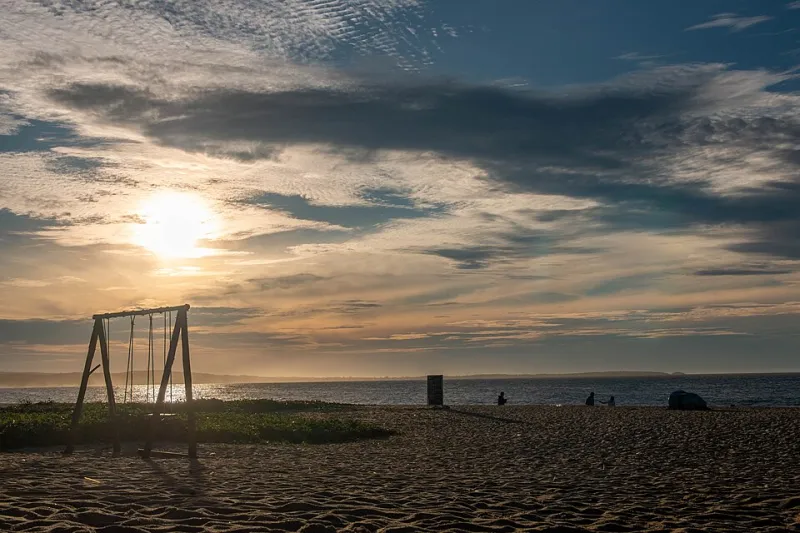
Phu Quoc and Phan Thiết will keep giving you reasons to stay — the food, the water, the sunsets that genuinely live up to the photographs. But the travelers who leave these places most changed are often the ones who spent an unexpected afternoon inside a temple courtyard, listening to something they couldn't quite name.
That's not a product. You can't book it on an app. And that might be exactly why it works.