Red Bricks, Old Prayers: How to Visit Phan Thiết's Cham Towers With Respect
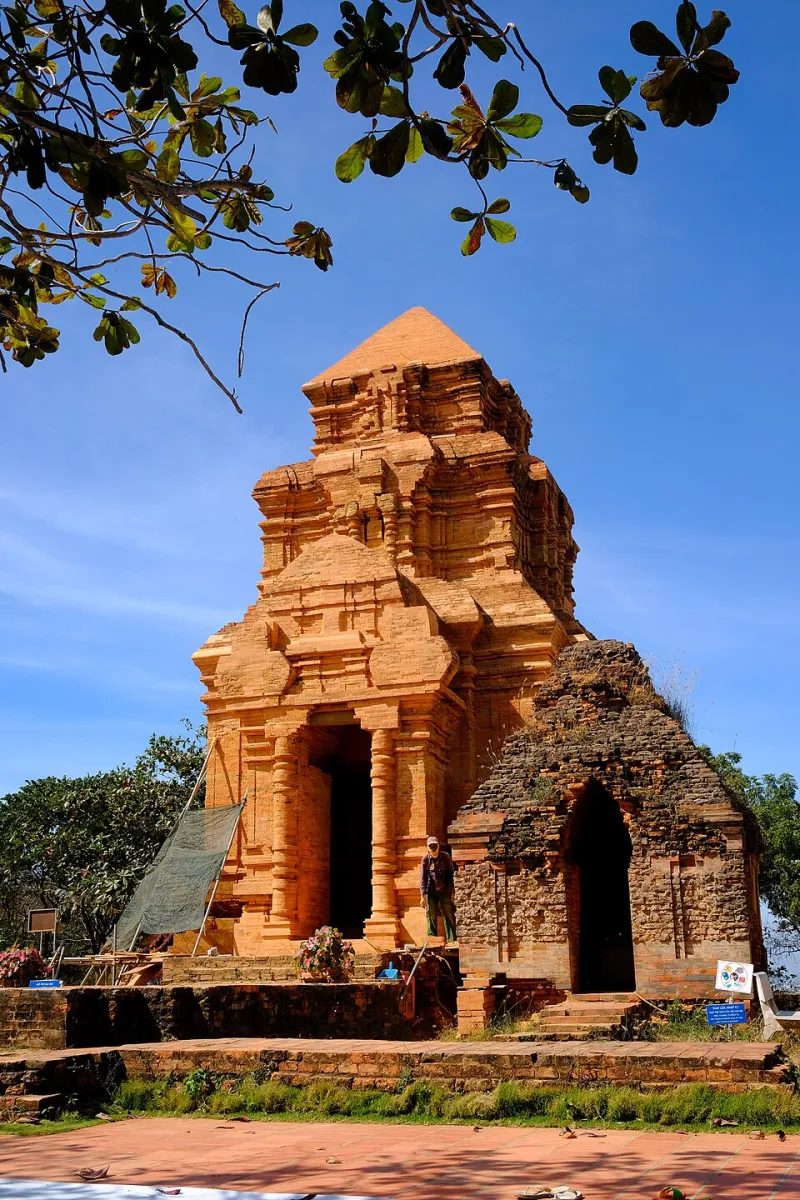
Photo: Vinnie Cartabiano, CC BY 2.0, via Wikimedia Commons
Phan Thiết has a way of pulling travelers toward the water. The beach, the kite surfers, the fish sauce, the red dunes just outside town. The Cham towers on Ba Nai Hill are easy to miss, or easy to reduce to a 20-minute photo break. That would be a mistake. These red-brick structures are one of the clearest windows into the region's history before Vietnamese rule, and they ask for more than a quick snapshot.
The towers are usually associated with the Cham people, whose kingdom of Champa once stretched along the central coast. The site in Phan Thiết, known as Po Sah Inu, is a compact group of towers dedicated largely to Shiva, with later associations to a local princess. The architecture is old, weathered, and quietly commanding. If you give it time, it changes the way you read the whole coastline.
Who Built These Towers, and When?
The Cham towers of south-central Vietnam were built over several centuries, roughly between the eighth and thirteenth centuries, depending on the site. Po Sah Inu is often dated to the late eighth or early ninth century, with later additions and repairs. This was a period when Champa was a network of competing and cooperating principalities, trading with China, India, and the wider Southeast Asian world.
The towers were religious buildings, not royal trophies. They housed deities, served as places of ritual, and helped bind communities together. The fact that they are still standing is partly a matter of engineering and partly a matter of local care. They have survived wars, weather, and the long, complicated passage of empires.
Reading the Bricks: What Makes Cham Architecture Different
The first thing you notice is the color: deep red brick, made from local clay and fired to a hardness that has lasted for centuries. The second thing is the detail. Look closely at the edges, the false doors, the carved figures, and the stacked roof forms. Cham builders were masters of texture, using brick to create patterns that shift in the morning and late afternoon light.
There is an old debate about how the bricks were joined. Some accounts emphasize plant resin or a special mortar; others point to extremely tight fitting and a technique of firing or reheating the structure. The exact method is still discussed by scholars. What matters for a visitor is the result: walls that feel almost seamless, with corners that hold the eye longer than a quick glance deserves.
The Towers as Living Spaces, Not Props
It is easy to treat old religious sites as open-air museums. But Po Sah Inu is not abandoned. Cham communities still gather there for rituals and festivals, especially during the Kate festival, when the site fills with offerings, music, and prayers. Even on quiet days, you may see incense, fruit, or flowers left at the shrines.
That changes the etiquette. You are not just walking through history; you are walking through someone's house of worship. The atmosphere is not solemn all the time, but it is not a playground either.
How to Visit With Respect
Dress modestly. Cover your shoulders and knees, especially if you plan to enter the tower areas or linger near active shrines. Remove your shoes where signs or attendants indicate. Do not climb on the brickwork, lean on fragile carvings, or move offerings to get a better photo.
Ask before photographing people who are praying. A quick nod toward your camera is usually enough. If someone says no, put it away. Keep your voice low. This is not the place for a loud video call or a fashion shoot that blocks the entrance.
There is usually a small entrance fee. Pay it. Buy water from the vendor outside rather than leaving trash behind. If you want to support the site, ask whether donations are accepted and where they go.
A Practical Half-Day Plan
Go early in the morning or in the late afternoon, when the light is softer and the heat is less punishing. The site is small enough to see in an hour, but give yourself 90 minutes if you want to read the signs, sit quietly, and watch the light move across the brick. Bring a hat, water, and shoes that are easy to slip off.
Combine the towers with a stop at a local fish sauce house or the Phan Thiết market, but do not cram them into a beach day. The site deserves its own slot. If you are staying in Mui Ne, arrange a car or motorbike taxi and confirm the return time before you leave.
Why They Deserve More Than a Photo Stop
Vietnam's best-known cultural sites often come with crowds, ticket queues, and a script. Phan Thiết's Cham towers offer something quieter: a chance to stand in a place that predates the Vietnam most American travelers learn about in school, and to see how the past is still being tended.
That is the honest case for putting the towers on your itinerary. Not because they are convenient, and not because they make a good background for a travel photo, but because they are an underrated chapter in a country that rewards travelers who look beyond the beach. Give them an hour. They will give you a different way to see the coast.