White Gold and Ocean Flavor: The Salt Farmers Quietly Shaping Phan Thiết's Table
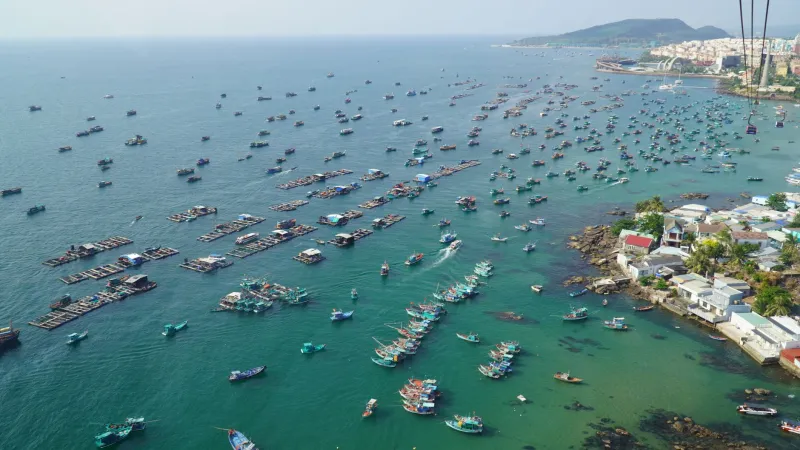
Most travelers passing through Phan Thiết have their eyes on the horizon — the red dunes, the kite surfers carving across the water at Mui Ne, the fishing boats stacked along the shore. What they tend to miss is what's glinting in the fields just off the main road: salt. Enormous, blinding, crystalline sheets of it.
Phan Thiết sits in one of the driest stretches of Vietnam's coastline, which makes it nearly perfect for something most tourists never think about: salt farming. And the industry here isn't some quaint relic. It's a living, breathing part of the regional economy and culture — one that's been quietly flavoring Vietnamese cuisine for generations.
A Craft That Predates the Tourist Brochures
Salt farming in the Binh Thuan province, which includes Phan Thiết, stretches back centuries. The geography is the main reason: long dry seasons, intense sun, reliable ocean winds, and flat coastal land that can be flooded and drained in controlled cycles. It's essentially a perfect natural setup.
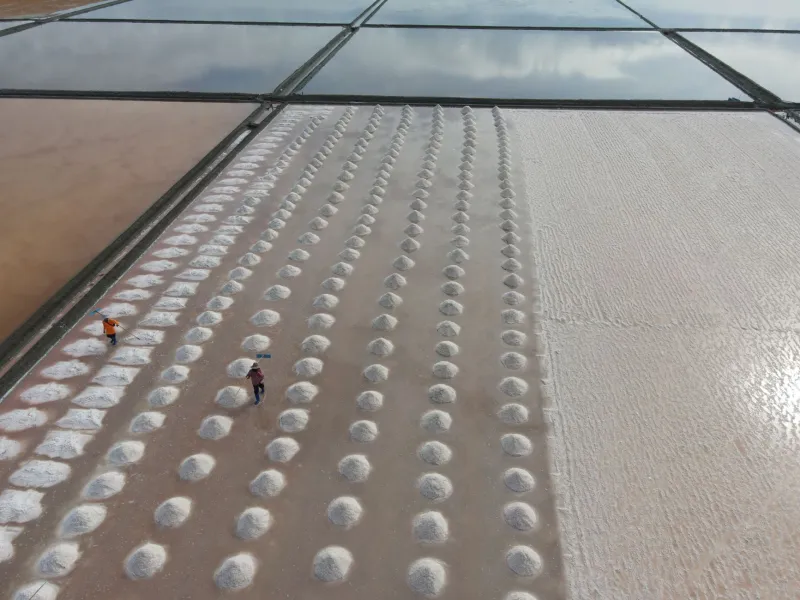
The process itself is deceptively simple and brutally demanding. Workers — many of them women — flood shallow rectangular ponds with seawater, then let the sun and wind do their work over days or weeks. As the water evaporates, salt crystals form across the surface of the ponds in white, geometric patterns that, from a distance, look almost like fresh snow. Workers then rake the crystals into mounds and haul them by hand or cart to the edges of the field.
On a hot day — and most days here are very hot — it's exhausting, low-margin work. A veteran salt farmer might earn the equivalent of a few dollars for a full day's harvest. The people doing this aren't doing it for the lifestyle. They're doing it because it's what their families have always done.
Walking the Ponds: What to Expect
Visiting a salt farm near Phan Thiết is easier than you might think, and it's one of the more unexpectedly striking experiences the region offers. The fields are typically most active in the dry season, roughly from January through June, when conditions are ideal for evaporation.
The visual impact hits you immediately. The ponds stretch out in a grid, each one reflecting the sky in a slightly different shade — pale blue, white, silver, sometimes faintly pink depending on the light and the microorganisms in the water. Early morning and late afternoon are the best times to visit, both for the photography and for the cooler temperatures. Midday at a salt flat in Binh Thuan province is not a joke.
Many farms are accessible by motorbike or bicycle from central Phan Thiết. Some welcome visitors informally, and a few have started offering more structured access with guides. If you want to actually talk with the farmers — learn their names, understand the rhythms of their work — it helps to go with someone who speaks Vietnamese, or at minimum, to bring patience and a willingness to communicate through gesture and expression.
Don't just show up and start snapping photos without acknowledging the people working. These are active workplaces, not set pieces.
How Salt Shapes the Food on Your Plate
Here's where things get genuinely interesting for food-focused travelers. Phan Thiết's salt tradition doesn't just produce table salt — it underpins an entire ecosystem of preserved and fermented foods that define the regional cuisine.
The most famous product is nước mắm, the fish sauce that's essentially the backbone of Vietnamese cooking. Phan Thiết and the nearby island of Phu Quoc both have deep nước mắm traditions, and the salt used in the fermentation process matters enormously. Local producers will tell you that the mineral profile of Binh Thuan salt gives their fish sauce a distinct depth that you can't replicate with industrial alternatives.
Beyond fish sauce, the region produces salt-cured fish, salted shrimp paste (mắm tôm), and a range of preserved vegetables that show up in everything from street food to home cooking. If you're eating at a local restaurant in Phan Thiết and something tastes more complex than you expected — briny and rich and almost umami-forward — there's a good chance you're tasting the downstream effects of generations of salt farming.
Where to Eat the Salt Story
Several restaurants in Phan Thiết take the local salt and seafood tradition seriously. Look for places near the fishing harbor that specialize in grilled or steamed seafood rather than tourist-friendly menus with photos. Ask specifically about cá muối nướng (salt-grilled fish) or any dish that features mắm as a central ingredient rather than just a condiment.
The town's seafood market, especially in the early morning, is also worth a detour. Watch how vendors handle the salt-cured products — the dried fish, the shrimp pastes, the preserved squid — and you start to understand how central salt is to the entire food chain here. It's not a flavoring. It's infrastructure.
Why This Matters to You as a Traveler
Phan Thiết has a growing reputation as a beach destination, and that's fair — the coastline is genuinely beautiful. But a place that's only understood through its beaches is only half understood.
The salt ponds offer something different: a window into the economic and culinary logic that shaped this region long before the first resort opened. Standing at the edge of a salt flat, watching someone rake crystals in the morning heat, you get a sense of how much labor and knowledge goes into the food that Vietnam is famous for.
That's the kind of travel that sticks with you. Not the infinity pool. The salt.