Off the Beaten Beach: How to Experience the Real Phu Quoc Like a Local
Let's be honest — the resort version of Phu Quoc is pretty great. Soft sand, cold drinks, stunning sunsets. Nobody's arguing with that. But if you've flown all the way to Vietnam and you're spending every hour inside a gated compound, you're kind of missing the whole point.
The real Phu Quoc — the one that existed long before the luxury hotels showed up — is still very much alive. You just have to know where to look.
Start Your Morning at a Neighborhood Café, Not the Buffet
The resort breakfast spread is tempting, sure. But skip it at least once and head into Duong Dong town instead. This is Phu Quoc's main hub, and it wakes up early. By 6 a.m., small plastic-stool cafes are already packed with locals sipping cà phê sữa đá — Vietnamese iced coffee with condensed milk — and working through bowls of bún quậy, a regional noodle soup you genuinely won't find anywhere else in Vietnam.
Look for places with handwritten menus and no English signage. That's not a red flag — that's the signal you've found the right spot. Point, smile, and let the owner guide you. The bill will almost certainly be under two dollars.
Wander the Duong Dong Market Before 8 A.M.
Duong Dong Market is Phu Quoc's beating heart, and the early morning shift is when it's most alive. Vendors haul in the night's catch, pepper farmers drop off fresh harvests, and grandmothers negotiate prices on produce with the kind of intensity that would make Wall Street traders nervous.
For American visitors used to grocery stores and DoorDash, this place can feel like sensory overload — in the best possible way. You'll see dried fish stacked like cordwood, live crabs clawing at buckets, and spice sellers with towers of peppercorns in every shade from pale green to deep black. Even if you're not buying anything, just walking through gives you a completely different picture of how this island actually functions.
If you do want to pick something up, Phu Quoc pepper is genuinely world-class and makes an excellent gift. The island's hồ tiêu (black pepper) has a floral, slightly fruity kick that's nothing like the pre-ground stuff back home.
Visit a Pepper Farm — Seriously
Phu Quoc's pepper farms are one of the island's best-kept secrets, and most visitors walk right past them on the way to the beach. That's a shame, because spending an hour at a working farm is one of the most grounding experiences the island offers.
Farms in the Kien Giang region often welcome visitors, especially if you show up with genuine curiosity and a little patience navigating the language barrier. You'll see the tall wooden trellises the vines climb, learn how the peppercorns are harvested by hand, and almost certainly get offered a sample straight off the plant. The flavor is bright and almost citrusy — nothing like what you're used to.
Some farms have started offering informal tours through local guesthouses and homestays, so ask around when you check in. It's worth the small effort.
Head to Ham Ninh Fishing Village
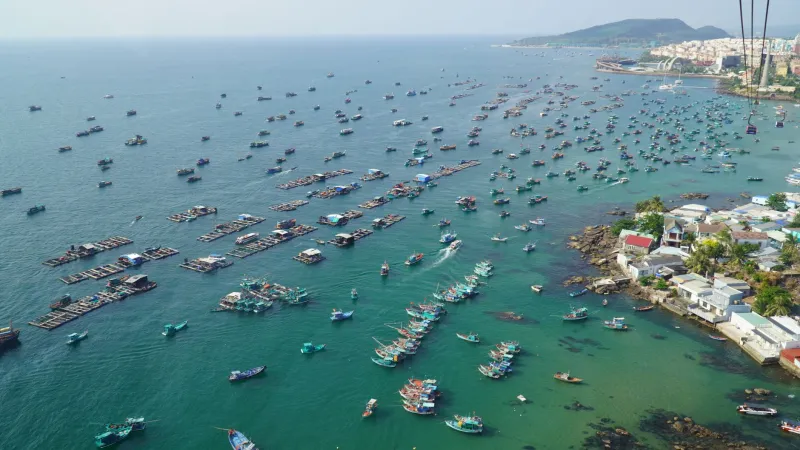
If Duong Dong is Phu Quoc's commercial center, Ham Ninh is its soul. This small fishing village on the island's eastern coast has been here for generations, and it still looks and feels like it. Wooden boats bob in the shallows, nets dry on bamboo poles, and kids chase each other through narrow lanes between stilted houses.
The seafood here is about as fresh as it gets anywhere on Earth. A handful of family-run restaurants line the waterfront, and they operate on a simple premise: whatever came in that morning is what's on the menu. Grilled crab, steamed clams with lemongrass, whole fish cooked over charcoal. Prices are a fraction of what you'd pay at a resort restaurant, and the quality is frankly better.
Get there before noon if you want the best selection. And bring cash — this is not a card-reader kind of place.
Spend an Afternoon at Cua Can Village
Head north from Duong Dong and you'll hit Cua Can, a quieter, more rural part of the island that sees maybe a tenth of the tourist traffic that the southern beaches get. The river here is calm and clear, shaded by overhanging trees, and local kids use it as a swimming hole on hot afternoons.
The surrounding area has small farms, fruit orchards, and homestays run by families who've lived on the island for decades. It's a good place to rent a bicycle, take your time, and just observe. There's no checklist here — it's more of a vibe.
Some travelers hire a local guide for this area, which is worth considering if you want context and conversation rather than just scenery.
A Note on Showing Up Right
Phu Quoc's local communities have been navigating rapid tourism growth for years, and that comes with real pressures. When you visit family-run businesses, be patient and respectful. Learn a few words of Vietnamese — even a mangled xin chào (hello) gets a warm response. Don't haggle aggressively at small markets where margins are already thin.
The island will give you a lot more if you come to it with some humility. The people here are proud of what they've built, and they're genuinely happy to share it — just on their own terms, not yours.
Phu Quoc's resort scene will always be there waiting for you at the end of the day. But the version of this island that actually has a story to tell? That one takes a little more effort to find. It's absolutely worth it.