Oysters, Luster, and Legacy: What Phu Quoc's Pearl Farms Don't Tell You on the Brochure
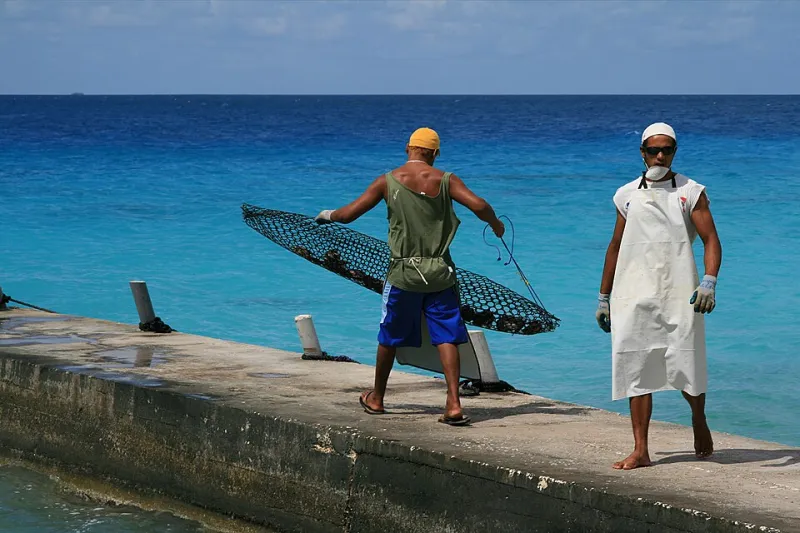
Photo: Sémhur, CC BY-SA 3.0, via Wikimedia Commons
Most people visiting Phu Quoc have heard the word "pearl" before they even land. It's on menus, in shop windows, stitched onto bags sold at the night market. But the actual story — the one that happens beneath the surface of the island's blue-green bays — is something most tourists never get close to. That's a shame, because once you understand how a pearl actually comes to exist, the whole island starts to look different.
A Craft That's Older Than the Tourist Brochures
Phu Quoc has been producing pearls commercially since the 1990s, but the relationship between local communities and the sea goes back much further. The island's position in the Gulf of Thailand, sheltered from the roughest currents and fed by nutrient-rich waters, makes it unusually hospitable for Pinctada maxima — the silver-lipped oyster responsible for most of the South Sea pearls sold worldwide.
Local farmers didn't stumble into this industry by accident. Many of the families running pearl operations today learned the trade from older relatives who harvested wild oysters long before cultivation was a concept anyone around here was talking about. That generational knowledge — about water temperature, seasonal currents, oyster behavior — is what separates a quality harvest from a mediocre one, and no amount of technology fully replaces it.
What Actually Happens on a Pearl Farm
Here's the part most visitors don't realize: farming a pearl is slow. We're talking two to five years from the moment a technician implants a small nucleus bead into a live oyster to the moment that oyster produces something worth selling. During that entire period, the oyster hangs in a mesh basket beneath a floating raft, tended regularly, cleaned of parasites and algae, and monitored for stress.
Yes, oysters get stressed. Water that's too warm, too polluted, or too disturbed can cause an oyster to reject the nucleus entirely — or worse, produce a misshapen pearl that won't make the cut. Farmers walk a constant tightrope between keeping the oysters healthy and keeping the operation economically viable. It's a lot more like agriculture than most people expect.
The implantation process itself is genuinely impressive to watch. A skilled technician can insert a nucleus bead into an oyster's gonad with surgical precision in under a minute. The oyster then coats that foreign object with nacre — the same iridescent material that lines the shell — layer by layer, year after year, until a pearl forms. The color, luster, and shape depend on genetics, water conditions, and a fair amount of luck.
Visiting a Farm: What to Expect
Several operations on the island welcome visitors, and the experience is worth building into your itinerary. The most established farms offer guided tours that walk you through the full lifecycle: from the hatchery where juvenile oysters are raised, to the open-water rafts where the cultivation happens, to the harvesting and grading rooms where finished pearls are sorted by size, shape, color, and surface quality.
If you've ever shopped for pearls stateside and felt completely lost — why does one strand cost $80 and another cost $8,000? — a farm tour will answer that question in about 45 minutes. You'll learn what "luster" actually means when you're holding a pearl up to the light, why perfectly round specimens are rarer than they sound, and how to tell the difference between a South Sea pearl and something that came out of a freshwater mussel in a factory environment.
Most farms also have retail shops on-site, and buying direct from the source is one of the better ways to ensure you're getting what you're paying for. Prices are still negotiable in many cases, and staff can often show you certification paperwork for higher-end pieces.
The Sustainability Question
It's worth asking, because pearl farming — like any aquaculture — has an environmental footprint. The good news is that oysters are filter feeders, which means they actually improve water quality in the areas where they're farmed. A healthy pearl farm can function as a kind of low-key reef restoration project, attracting fish and other marine life to the raft structures.
The more conscientious operations on Phu Quoc have started leaning into this angle deliberately. Some have partnered with local environmental groups to monitor water quality, limit farm density, and avoid areas with sensitive coral. It's not a perfect industry, but it's considerably cleaner than most forms of jewelry production, and the farmers themselves tend to have a strong personal stake in keeping the surrounding water healthy — their livelihoods depend on it.
More Than a Shopping Stop
It's easy to treat a pearl farm visit as a glorified retail experience — show up, look at some oysters, buy a bracelet, leave. But if you slow down and actually talk to the people running these operations, you'll find something more interesting: a community that's figured out how to build a sustainable economy around one of the ocean's most extraordinary natural processes.
For US travelers used to seeing pearls behind glass cases at department stores, standing on a floating raft in the Gulf of Thailand and watching someone open a live oyster is a genuinely different kind of travel moment. It connects you to the place in a way that a beach day — however beautiful — usually doesn't.
Phu Quoc's pearl farms aren't the island's flashiest attraction. They don't have zip lines or infinity pools. But they offer something rarer in modern travel: a window into how a place actually works, and why it looks the way it does. That's the kind of thing worth getting off the resort shuttle for.